
Our realistic render redesigned the orangery—so we made a do-not-invent list
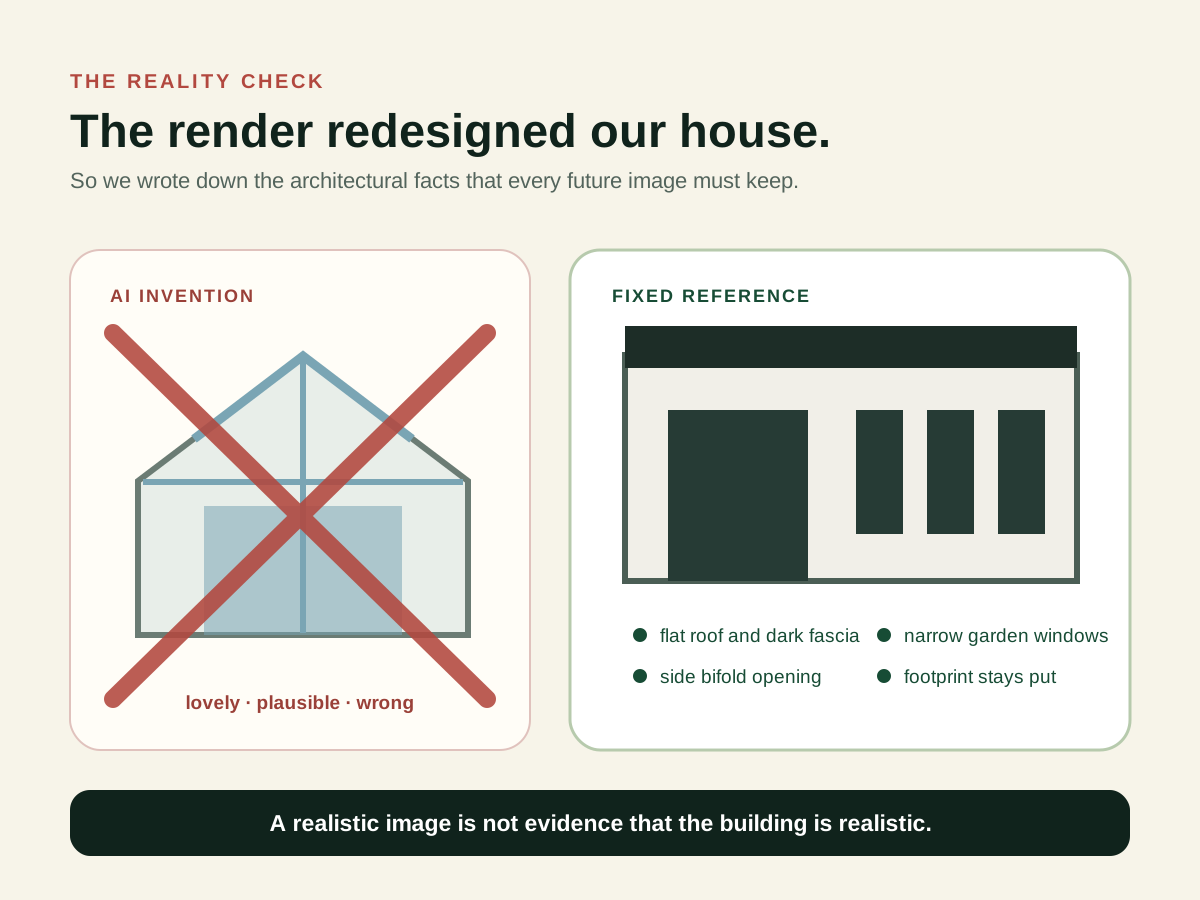
A convincing garden render invented a glazed conservatory, so photographs of the real extension became a fixed architectural reference for every later image.
It looked realistic because the light was good
Once the panorama had given us the overall composition, we asked AI for photorealistic shots of all the garden segments.
The images were warm, polished and entirely capable of causing an expensive misunderstanding.
The orangery had become a glazed conservatory. It had a roof lantern and doors facing towards the middle of the garden. It looked perfectly believable if you had never seen our house.
Unfortunately, we had.
I uploaded two photographs and pointed out that the real extension was flat-roofed and white-rendered, with a deep dark fascia. The bifold doors were on the side facing the existing patio, while the longer garden elevation had tall, narrow dark-framed windows.
The terrace therefore needed to wrap around the real corner and connect to the side opening. It could not be designed around a convenient set of imaginary doors.
We stopped saying “make it accurate”
“Keep the house accurate” sounds like a clear instruction. It is not.
The AI does not know which parts you regard as fixed, which parts you are happy to redesign and which apparently minor details completely change how the space works.
So we wrote a fixed architectural reference:
- flat roof
- white rendered walls
- deep dark fascia
- bifold opening on the side
- narrow dark-framed windows on the long elevation
- no glazed roof or lantern
- footprint and relationship to the original house stay unchanged
- window and door positions are not design opportunities
That list did more useful work than another paragraph asking for realism.
The slightly painful downgrade
We also had to be honest about the images we already liked.
If a render showed the wrong building, it was not a realistic proposal. It was a mood reference. The lighting might still be useful. The material combination might still be lovely. The spatial claim was not evidence simply because the image had shadows and reflections.
That gave us a simple acceptance test for future pictures:
- Does it preserve the fixed architectural facts?
- Does it keep the retained tree and boundaries where the references place them?
- Does it show only changes we actually asked to explore?
- If it fails any of those, can we still label the useful part honestly as mood only?
The best AI image is not necessarily the prettiest one. It is the one that helps us make a decision without smuggling in a different building.
With the main anchors under control, we moved onto a much smaller patch of garden that had resisted every obvious answer.
Behind this outcome
Create a do-not-invent pack for AI visualisations
Planned for the Space: our fixed-reference card, façade and opening checklist, render acceptance test and mood-versus-evidence labelling method.